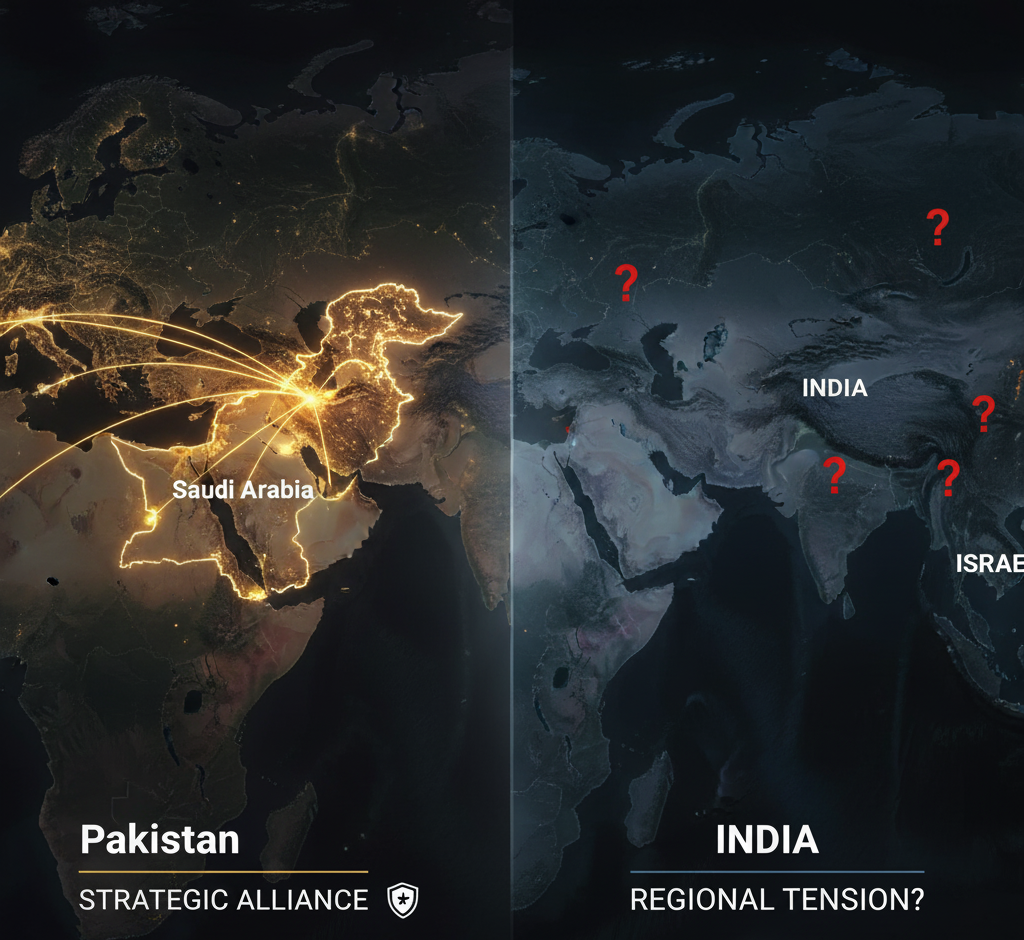

ISLAMABAD/RIYADH — In a landmark development with profound implications for regional geopolitics, Pakistan and Saudi Arabia have signed a new “Strategic Mutual Defence Agreement,” a pact that one Pakistani minister has suggested extends Islamabad’s nuclear capabilities to the Kingdom. The agreement, signed in Riyadh, formalizes decades of close security cooperation and is being seen as a major recalibration of the security architecture in the Middle East and South Asia.
The agreement’s central tenet is a commitment that “any aggression against either country shall be considered an aggression against both.” While the official text of the pact does not explicitly mention nuclear weapons, Pakistan’s Defence Minister, Khawaja Muhammad Asif, has stated that the country’s capabilities “will absolutely be available under this pact.” This assertion has sent ripples through diplomatic and security circles, raising questions about the future of nuclear proliferation and deterrence.
A Shift in Regional Dynamics
Analysts suggest the timing of the deal is a direct response to a perceived decline in the United States’ role as a security guarantor in the region, particularly for its traditional Gulf allies. The pact provides Saudi Arabia, an economic powerhouse, with a powerful military partner and a potential nuclear shield. For Pakistan, the agreement offers much-needed economic strengthening and a heightened strategic profile in the Islamic world.
The pact is a culmination of a long-standing military and economic relationship. Pakistan has a history of providing military training and personnel to the Saudi armed forces, and Saudi Arabia has consistently been a vital financial partner for Islamabad. This new agreement, however, elevates the relationship from informal cooperation to a binding, institutionalized framework.
Implications for India, Israel, and the U.S.
The new alliance has drawn particular scrutiny from India and Israel. For India, the agreement could embolden Pakistan and raise concerns about a more assertive stance in future disputes. New Delhi’s Ministry of External Affairs has stated that it is “studying the implications of this development for our national security as well as for regional and global stability.”
For Israel, the pact introduces an unprecedented deterrent. With Pakistan’s nuclear capabilities now theoretically tied to Gulf security, any future military action by Tel Aviv in the region could face a new and significant level of risk. The agreement is also seen as a setback to the ongoing efforts to expand the Abraham Accords.
The United States has yet to issue an official response, but the pact underscores the shifting allegiances and growing independence of its long-term allies in the Middle East.
Beyond the Headlines: The ‘Islamic NATO’ Question
The Pakistan-Saudi Arabia agreement has also revived discussions about the possibility of a collective Muslim military alliance, often dubbed an “Islamic NATO.” While such a bloc has been discussed for decades, the formalization of this pact between the custodian of Islam’s holiest sites and its only nuclear-armed state provides a new momentum. While formidable obstacles, such as internal rivalries between different Muslim nations, remain, the symbolism of this agreement is undeniable.
In conclusion, the new defence pact between Pakistan and Saudi Arabia is more than just a formalization of existing ties. It is a strategic move that could fundamentally reshape the power balance in the Middle East and South Asia, introducing a new era of deterrence and cooperation, with Pakistan’s nuclear capabilities at its very core.