
Santa Clara/Hyderabad | September 2025
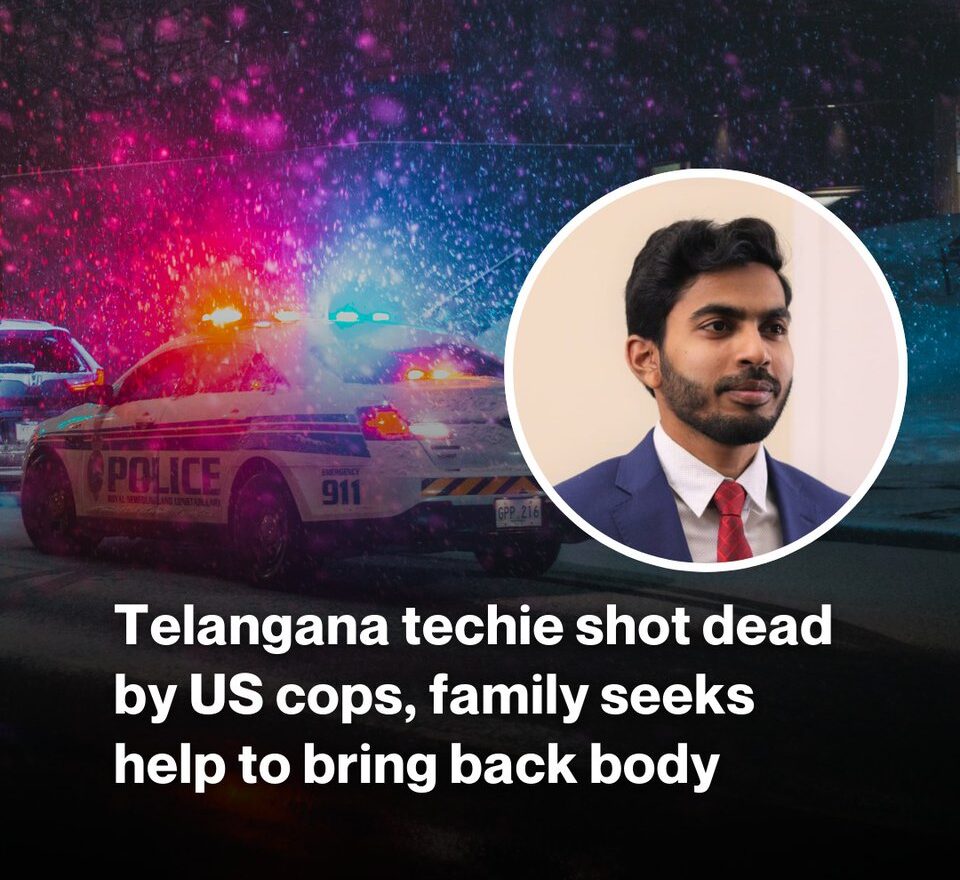
Mohammed Nizamuddin, a 32-year-old Indian national from Telangana, was fatally shot by police in Santa Clara, California, following an alleged altercation with his roommate. While U.S. authorities claim the shooting was in response to an immediate threat, his family in India has raised serious doubts over the police version, alleging bias, mishandling of information, and negligence in communication.
The Incident
According to the Santa Clara Police Department (SCPD), on September 3 at 6:08 a.m., officers responded to a 911 call reporting a stabbing in progress at a residence on Eisenhower Drive.
- Officers reportedly heard commotion inside the house and kicked down the door.
- On entering, one officer allegedly found Nizamuddin on top of his roommate, holding a knife in a raised position.
- Despite repeated verbal commands, he allegedly ignored instructions and raised the weapon again toward the pinned-down roommate.
- At that moment, Officer Robert Allsup, a 12-year SCPD veteran, fired four rounds, striking Nizamuddin.
- He was rushed to hospital but was declared dead; the roommate survived with multiple stab wounds and was treated for his injuries.
Authorities said two knives were recovered from the scene — one reportedly broke during the attack, after which Nizamuddin switched to another.
Who Was Mohammed Nizamuddin?
- Hailing from Mahabubnagar district, Telangana, Nizamuddin moved to the U.S. for higher education and later worked in the IT sector.
- Neighbors and roommates described him as reserved, but reports suggest he had been unemployed for over a year.
- On his LinkedIn profile, he had written extensively about facing racial discrimination, workplace harassment, wrongful termination, and wage fraud in the U.S.
- His posts indicate he was distressed, highlighting both professional struggles and alleged mistreatment.
The Police Perspective
Police Chief Cory Morgan defended the officer’s decision, saying preliminary evidence suggested the intervention likely prevented a homicide.
“Our officer was faced with an immediate and life-threatening situation. His actions stopped further harm to the victim,” Morgan stated.
As per protocol, Officer Allsup has been placed on paid administrative leave pending investigation. Both the Santa Clara County District Attorney’s Office and SCPD’s Internal Affairs Division are reviewing the case.
Family’s Allegations
Back in Telangana, Nizamuddin’s family disputes the police account, insisting he was not the aggressor.
- They allege he himself had called for help and was wrongfully shot.
- They accuse the authorities of racial bias and “narrative building” to justify the killing.
- Shockingly, they claim they were not informed for almost two weeks, learning of his death only through acquaintances.
- The family is demanding a transparent investigation, diplomatic intervention by the Indian government, and the immediate repatriation of his remains.
His brother expressed anguish:
“He went there for education and better opportunities. Instead, he faced harassment, unemployment, and now this tragic death. We need the truth.”
Wider Implications
This case has ignited debate around several sensitive issues:
- Use of Force by U.S. Police
- Questions are being raised about whether non-lethal options (such as tasers) could have been used.
- Advocates argue that quick resort to firearms reflects a systemic issue in U.S. policing.
- Mental Health and Immigrant Stress
- Nizamuddin’s posts reveal the toll of discrimination and job insecurity.
- Experts suggest immigrant workers often lack mental health support in high-pressure environments.
- Diplomatic Concerns
- India’s Ministry of External Affairs is under pressure to ensure justice and proper handling of the case.
- Delayed communication with the family has fueled anger and distrust.
- Community Trust & Racial Bias
- Allegations of bias in both workplace and law enforcement contexts highlight broader concerns faced by South Asian immigrants in the U.S.
What Happens Next
- Investigation: The District Attorney’s Office is expected to review bodycam footage, 911 call recordings, and forensic evidence.
- Community Reaction: Civil rights groups are monitoring developments, calling for independent oversight.
- Family Support: The Indian consulate in San Francisco has been approached for assistance in repatriation.
- Public Scrutiny: If bias or mishandling is found, the case could intensify debates about policing standards and treatment of immigrants.
Conclusion
The death of Mohammed Nizamuddin is more than a tragic clash between law enforcement and a distressed individual. It underscores the challenges faced by immigrants balancing cultural displacement, professional pressures, and racial prejudice in foreign countries.
As investigations proceed, only transparency, accountability, and empathy can provide answers — and justice — to a grieving family still struggling to comprehend why a promising life ended so abruptly in a foreign land.