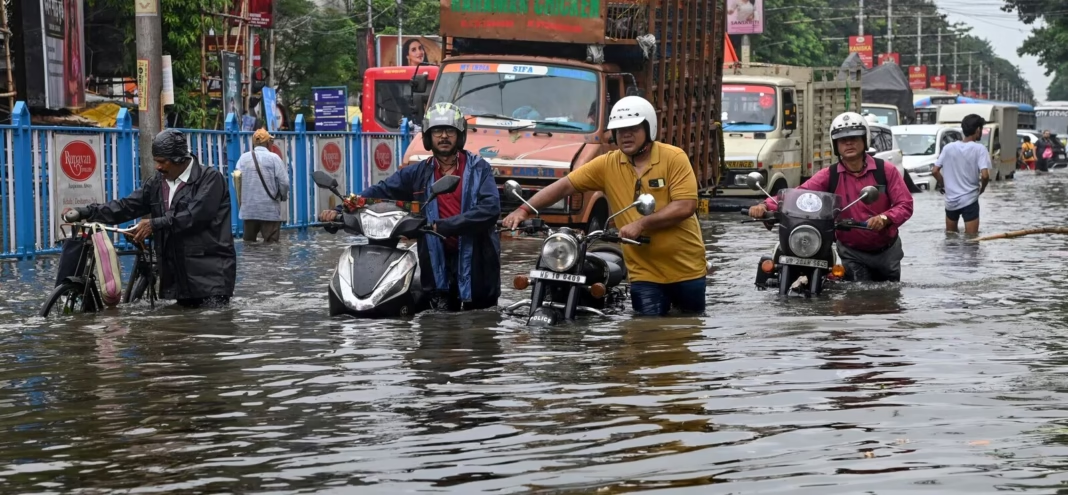

Kolkata reeled under severe waterlogging on September 23 after a day of relentless rainfall that brought the city to a standstill. The heavy showers, recorded at over 120 mm within 24 hours, left major roads submerged and several neighborhoods under waist-deep water. From central Kolkata to suburban areas like Dum Dum, Behala, Tollygunge and Ultadanga, residents were seen wading through flooded streets, while vehicles struggled to move through stagnant water.
Public transport was thrown off gear as buses, taxis and autos moved at a snail’s pace or broke down mid-route. With roads choked, the Metro railway became the only dependable option, leading to massive overcrowding. Air travel also faced setbacks with delayed departures from Netaji Subhas Chandra Bose International Airport, while trains from Howrah and Sealdah stations ran behind schedule due to waterlogged tracks.
Daily life took a hard hit as schools announced sudden closures and office-goers found themselves stranded for hours. In many low-lying localities, water entered ground-floor homes, damaging furniture and appliances. Families spent the night in darkness after power cuts were imposed in flooded areas to avoid accidents. “We had no electricity and knee-deep water inside the house all night. It was impossible to sleep,” said Rituparna Das, a resident of Behala.
The Kolkata Municipal Corporation pressed pumps into service across the worst-hit zones and assured that the water would drain within 12–18 hours if the rains did not return. Officials, however, acknowledged that the city’s century-old drainage system remains grossly inadequate to cope with intense spells of rainfall in such a short span.
The episode has reignited conversations around Kolkata’s long-standing flood woes. Experts blame rapid urbanization, encroachment of water bodies and poor drainage maintenance for worsening the city’s monsoon situation year after year. For thousands of residents, the immediate priority is cleaning homes, salvaging belongings and hoping that the rains ease off before another flood-like situation unfolds.